Eduardo Moguillansky
×
  • Home
  • Projects
    • Resilienztraining
    • Jardin
    • luftzugtest
    • Moire
    • panorama
    • zaehmungen
    • bandskizzen
    • limites
    • stellung
    • cire perdue
    • 121
    • tempo giusto
    • in love
    • re equestri
    • el pulso de lo inmovil
    • bauauf
    • double
    • impedanz
  • About

BauauF

2009 | 8'
version 1: sax, e-guitar, pf, perc
version 2: bass cl,e-guitar, vc, pf
version 3: fl, cl, vc, pf
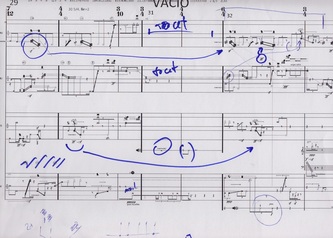
downloads: Score #1, Score #3
  • DE
  • EN
<
>
BJÖRN GOTTSTEIN, Kommentar
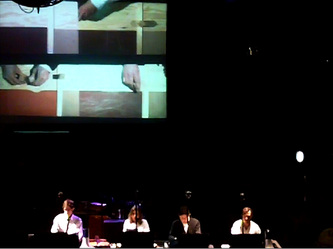
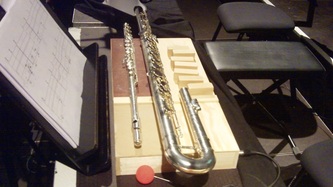
Elementar wirkt Eduardo Moguillanskys Instrumentierung von bauauf. Die Musiker sitzen wie nüchterne Bürokraten hinter Tischen und verrichten sinnlose Arbeiten an hölzernen Kisten. Immerhin handelt es sich bei den vier schlichten Objekten um Spezialanfertigungen mit unterschiedlich definierten Klangzonen. Nur selten, und dann auch nur für kurze Augenblicke, wechseln die Instrumentalisten zu ihren traditionellen Instrumenten. Nach Erweiterungen des Spiels durch Musikmaschinen, Automaten oder Roboter wird man hier vergeblich suchen. Abgesehen von den elektrischen Megaphonen und einem elektronischen Zuspiel werden keine Mechanismen in Gang gesetzt, die über die übliche Praxis des Instrumentalspiels und den Stand des Instrumentenbaus hinausgehen. Die Rolle der Maschine übernehmen hier die Musiker selbst. Sie verkörpern einen Meta-Apparat, sind die Rädchen im großen Getriebe, dessen Ziel sie nicht kennen müssen, um sein Funktionieren zu gewährleisten. Moguillansky entwirft in bauauf das kompositorische Abbild des “proceso de reorganización nacional”, dem sein Land während der Diktatur der Siebziger Jahren unterworfen war. Vor einigen Jahren wurden die Dokumente der Junta-Bürokratie veröffentlicht, in denen sich der “Prozess der nationales Neugestaltung” als eine organisatorische Kraftanstrengung offenbarte, die auf das reibungslose Zusammenspiel unzähliger Staatsdiener angewiesen war - und sich auf die verlassen konnte. bauauf -den Titel hat der Argentinier dem DDR-Jargon entlehnt - ist eine Bürokratenmusik, ein Totentanz, in dem die Megaphone, statt die Propaganda zu verstärken, für die sie geschaffen wurden, nur Nebensächliches hervorheben. Auch das elektronische Zuspiel aus hochfrequenten Tönen transportiert eine besondere Botschaft. Sie gilt ausschließlich jenen, die die 1982 beendete DIktatur nicht mehr selbst erlebt haben. Aus den Lautsprechern dringen Frequenzen um 17000 Hz. Derart höhe Töne werden in der Regel nur von Menschen wahrgenommen werden, die jünger als Dreißig Jahre alt sind. 
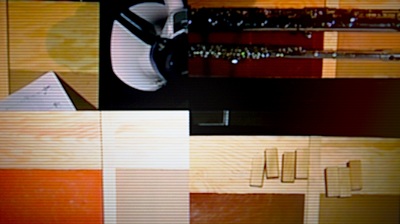
In BAUAUF there are 4 players detached from their “normal” instruments and put in front of wooden boxes, maybe rudimentary versions of a chess-board, maybe a desk. They go through a rigorously planned matrix of transformations, over and over, to return, indefectively, to the original state: an empty surface. As the bylaw specifies, they take their regulated breaks to practice their instruments. Background music plays throughout. In this case, a 17 kHz sinus tone, which you will probably not hear if you are older than 30. 
Originally a subtitle was sketched: “procesos de reorganización”. I removed it. Suffice to say that the piece is about the act of reorganization: putting things and taking them away. 
BJORN GOTTSTEIN
​The instrumentation of Bauauf seems rudimentary. The musicians seat like sober burocrats behind tables and execute pointless tasks on wooden boxes. Rarely (and for very short moments) the musicians switch to their traditional instruments. A search after extensions of the game through machines, automata or robots is futile. No mechanism outside the normal praxis of instrumental playing is launched: the role of the machine is adopted by the musicians themselves. Together they incarnate a meta-apparatus, they are the wheels in the large gear, whose objective they do not necessary know in order to successfully perform their operation. Moguillansky sketches in bauauf the image of the "Proceso de Reorganización Nacional", to which his land was subjected during the dictarorship of the seventies. Some years ago the documents of the bureaucracy of the Junta where made public, where the "Process of national Reorganization" xXX
"bauauf" -the title was taken from the DDR jargon- is bureaucrat-music, a danse-macabre where the megaphones, instead of amplifying propaganda (for which they where created), only emphasize indicental defects. Also the electronic tape consisting of high-frequencies transports a special message. It's destined exclusively to those wo did not experience the dictatorship ended in 1982. 17000 Hz frequencies come out of the speakers. Such high frequencies can only be perceived by people who are younger than 30 years of age.      

Downloads

  • SCORE #3
  • SCORE #1